CASE STUDY
International Conference
World Economic Forum
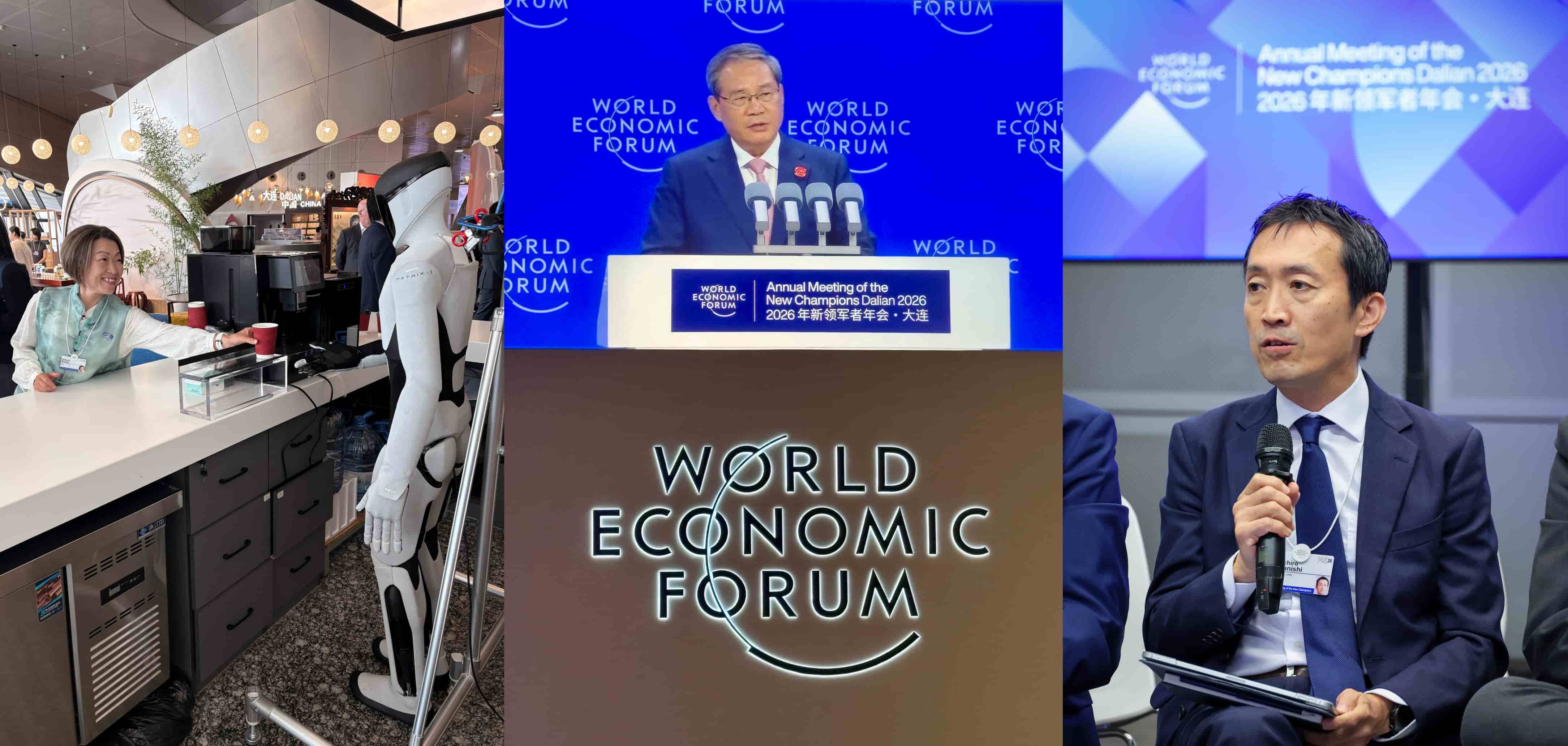
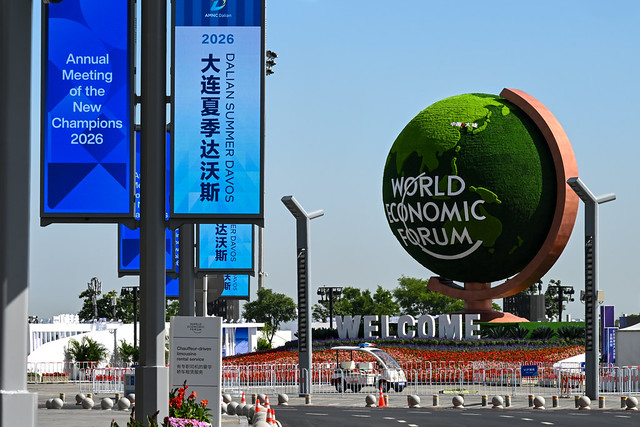
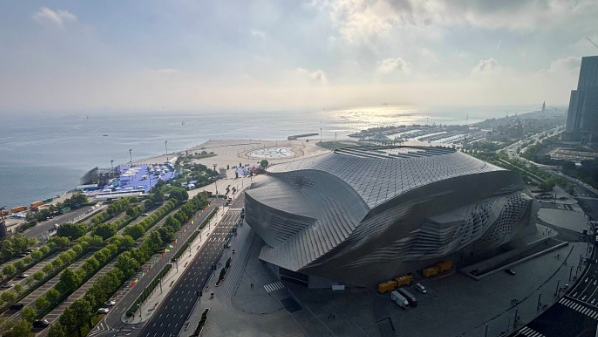
Mitsui O.S.K. Lines (MOL) participated in the World Economic Forum’s Annual Meeting of the New Champions 2026 (known as "Summer Davos"), held in Dalian, China, from June 23–25.
WEF (World Economic Forum) is an international non-profit organization founded in 1971. It provides a platform where leaders from government, business, and academia meet to discuss and collaborate on major global challenges. With the mission of “improving the state of the world,” it promotes dialogue and cooperation through various meetings and initiatives. Its annual meeting held every January in Davos, Switzerland—widely known as the Davos Conference—covers a broad range of topics, including climate change, the economy, and technological innovation.
WEF holds this annual international conference in China every June, formally called the Annual Meeting of the New Champions (AMNC). It is one of the organization’s key gatherings alongside the winter Davos Conference.
While the winter Davos Conference focuses on global issues discussed by political and economic leaders, the “Summer Davos” emphasizes entrepreneurship, innovation, and next generation growth companies. It brings together emerging businesses, tech firms, researchers, and innovators to discuss the social implementation of new technologies and explore new growth models.
Summer Davos 2026, held for the 17th time, brought together over 1,800 leaders from more than 90 countries and regions. With “Innovating at Scale” as its main theme, participants engaged in active discussions on topics such as shifts in global trade, prospects for China’s economy, technological advances in the real economy, next generation employment, and competitive energy transitions. Against the backdrop of China’s 15th Five Year Plan, Chinese companies and government officials had a strong presence, drawing attention to China driven innovation and clean energy strategies.
Premier Li Qiang attended on behalf of the Chinese government. In his opening ceremony remarks, he stated that China’s economy remains resilient despite ongoing geopolitical tensions and supply chain disruptions, emphasized the importance of “openness and cooperation,” and signaled China’s intention to further open its market to the world.

MOL has participated in Summer Davos continuously since 2023, making this our fourth time attending. As maritime transport is a core infrastructure supporting global logistics and trade—and an industry directly exposed to geopolitical risks and the impacts of the energy transition—we joined various sessions throughout the event and engaged in meaningful discussions with other participants.
In a regional cooperation session, MOL's executive noted that regional integration in the Asia Pacific is advancing, with intra regional trade accounting for around 60%, and highlighted APEC and RCEP as key frameworks that support regional connectivity.
He also stressed that, for a shipping company, ensuring supply chain stability amid recent geopolitical risks in the Strait of Hormuz and the Red Sea cannot be addressed by companies alone; close collaboration between governments and the private sector is essential.
Across the session, participants discussed a wide range of topics—including energy security, AI governance, carbon market coordination, and green growth—reaffirming the importance of regional cooperation.
Energy transition and supply chain stabilization—key topics discussed at Summer Davos—are also critical issues for the shipping industry. As a comprehensive maritime transport company, MOL is advancing the adoption of clean alternative fuels and working toward net zero emissions, while actively engaging in global dialogues on these challenges.
Through continued participation in global forums such as New York Climate Week and the Davos Conference, MOL contributes to discussions on the future of sustainable transportation and resilient supply chains while sharing insights with customers, partners, and policymakers around the world.
MOL is focusing on introducing and evaluating various alternative fuels for its vessels, steadily advancing efforts to reduce greenhouse‑gas (GHG) emissions from shipping.