Mitsui O.S.K. Lines (MOL) is focusing on the introduction and examination of a wide range of alternative fuels for vessels, and is steadily promoting efforts to reduce greenhouse gas (GHG) emissions from vessels.
In 2023, the International Maritime Organization (IMO) adopted a GHG reduction strategy for international shipping that aims to achieve “net-zero GHG emissions by or around 2050.” Although the adoption of the “IMO Net-Zero Framework,” which was broadly agreed upon based on this strategy, has been postponed, we recognize that the medium- to long-term global trend toward decarbonization remains unchanged.
With a view to achieving “net-zero emissions by 2050,” MOL Group will continue its low‑carbon and decarbonization efforts without slowing its progress, and will link these efforts to the strengthening of its medium- to long-term competitiveness.
As we advance a wide range of initiatives, the introduction of alternative fuels represents an important action that plays a central role in our efforts.
MOL Group does not adopt a policy of “introducing the same fuel for all vessels,” but instead selects the most appropriate fuel depending on vessel type, trading route, and operational profile.
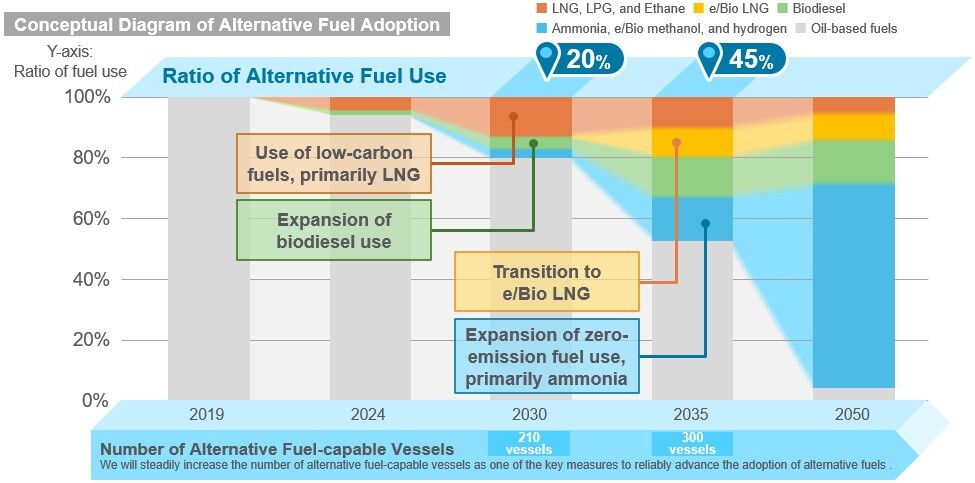
In the short to medium term, MOL Group will utilize low-carbon fuels that are currently practical, such as LNG and biofuels, and will steadily advance GHG emission reductions from the present stage. At the same time, from a medium- to long-term perspective, MOL Group is proceeding with fleet expansion in anticipation of the social implementation of zero-emission fuels such as ammonia.
In addition, MOL Group’s efforts are not limited to simply “using” fuels.
MOL Group is also engaged in initiatives that encompass fuel procurement and supply, as well as the development of operational frameworks.
The widespread adoption of Low-Carbon and Decarbonized Energy requires both vessels which use alternative fuels and reliable supply infrastructure.
Leveraging the expertise cultivated through maritime transportation, MOL Group is also engaged in building the entire energy value chain, including reception, storage, and supply.
Ammonia is attracting attention not only as a fuel that emits no CO₂ during combustion, but also as a “hydrogen carrier” capable of transporting large volumes of hydrogen.
Applying the expertise accumulated through FSRUs (Floating Storage and Regasification Units) in the LNG field, MOL Group is working to develop infrastructure for the reception and supply of ammonia.
At the same time, with a view to future growth in ammonia demand, MOL Group continues to examine this area from both institutional and technological perspectives.
Through these initiatives, MOL Group is steadily building a foundation that will enable a prompt response to future phases of expanding ammonia demand.
Achieving a carbon-neutral society requires the effective utilization of CCUS (Carbon Capture, Utilization and Storage) to capture, store, and utilize emitted CO₂. In hard to abate sectors where decarbonization is challenging, the volume of CO₂ captured, stored and transported via liquefied CO₂ transport is expected to increase significantly in the future. In 2021, MOL invested in the Norwegian company Larvik Shipping, which has been transporting liquefied CO₂ by sea in Europe for over 35 years, and has continued to engage in the liquefied CO₂ maritime transport business.
As one of the means to support the implementation of CCUS, MOL is advancing the development of various concepts for liquefied CO₂ carriers.
As one example of these initiatives, MOL Group is participating in the world’s first cross-border CO₂ marine transportation and storage project, and has concluded long-term charter contracts for two newly built liquefied CO₂ carriers for Northern Lights (click here for details).
MOL is committed to meeting the growing demand for liquefied CO₂ shipping and contributing to the development of the CCUS value chain as a trusted partner.
Hydrogen is positioned as one of the long-term options as a zero-emission fuel that emits no CO₂ during combustion.
MOL is participating in a project aimed at the practical application of a large, low-speed two-stroke hydrogen-fueled marine engine, which Japan Engine Corporation is developing ahead of the rest of the world. (*).
This project combines a high-efficiency, high-output, low-speed two-stroke hydrogen-fueled engine, the 6UEC35LSGH, with liquefied hydrogen fuel, enabling long-distance, long-duration, and high-output operations—an important technological step toward the practical use of large oceangoing hydrogen-fueled vessels.
In 2026, the world’s first hydrogen-fueled cargo transportation using a full-scale engine installed on an actual vessel was successfully initiated, confirming stable operation under high-load conditions as well as significant GHG reduction effects. Looking ahead, MOL and MOL Drybulk, which will be responsible for the operational management of hydrogen-fueled multi-purpose vessels equipped with this engine, will continue to steadily advance technological development toward the social implementation of hydrogen-fueled ships through real-vessel-based demonstration operations. (Find more)
(*) Japan Engine Corporation together with Kawasaki Heavy Industries, Ltd. and Yanmar Power Technology Co., Ltd., has been selected for the Green Innovation Fund Project of the New Energy and Industrial Technology Development Organization (NEDO), and is developing a hydrogen fuel engine that will be the world’s first propulsion main engine for large ocean-going and coastal vessels.
In parallel with such foundational infrastructure development, demonstration, introduction, and supply-chain considerations are being advanced for each fuel, as outlined below.
LNG (liquefied natural gas) is a low-carbon fuel that can reduce CO₂ emissions compared with conventional heavy fuel oil, and for which practical applicability and supply systems have already been established. MOL Group is promoting the introduction of LNG as a core option for low-carbon initiatives in the short to medium term.
MOL Group operates one of the world’s largest LNG carrier fleets and has accumulated extensive expertise through many years of safe LNG transportation and operation.
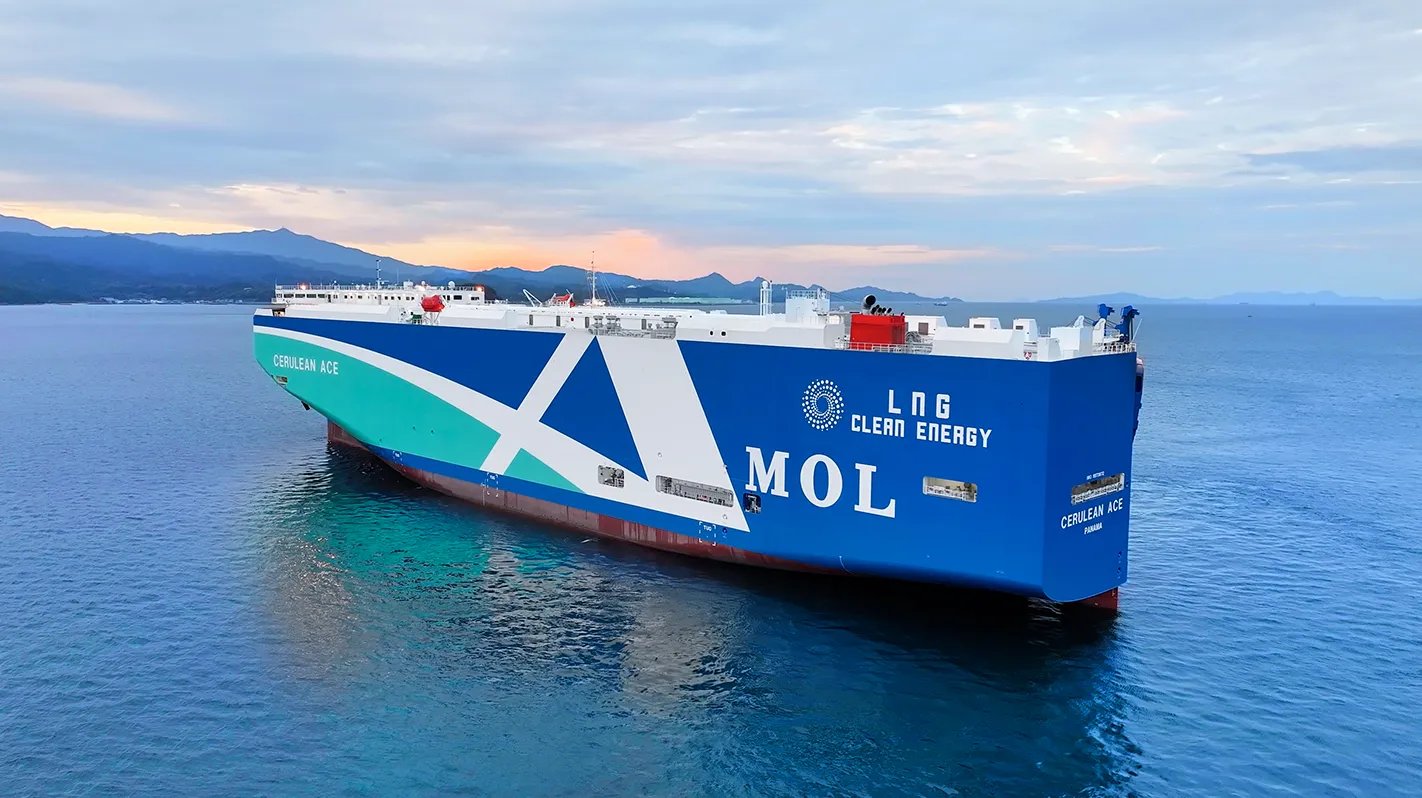
Leveraging these strengths, MOL Group is advancing the introduction of LNG dual-fuel vessels across a wide range of vessel types, not limited to LNG carriers but also including bulkers and car carriers.
In addition, MOL Group is working to reduce methane slip, which is regarded as a challenge associated with LNG fuel, through demonstration testing on actual vessels and technological development, thereby aiming to further enhance environmental performance. Looking ahead, with a view to transitioning from fossil-based LNG to e-LNG and bio-LNG, MOL Group will seek to fully leverage LNG’s role as a transition fuel.
In addition, MOL Group is also promoting the introduction of LNG fuel in the ferry sector. Following the completion in January 2023 of Sunflower Kurenai, Japan’s first LNG-fueled ferry, MOL Group has continued the development of sister ships and subsequent vessels, including Sunflower Murasaki, completed in April of the same year, Sunflower Kamuy, completed in January 2025, and Sunflower Pirika, completed in June of the same year. Through these efforts, the practical implementation of LNG fuel use in domestic ferries is being steadily expanded.
Through these initiatives, MOL Group is working to accumulate knowledge through actual operations and to further enhance environmental performance.
e/Bio-LNG is characterized by the ability to utilize existing LNG infrastructure as is, making it a fuel that enables progress toward decarbonization while lowering the barriers to fuel transition.
MOL Group has operational experience in the use of bio-LNG and has already begun utilizing it in actual vessel operations.
These fuels can be used without modification on LNG dual-fuel vessels, and are positioned to achieve step-by-step decarbonization while leveraging the existing fleet.
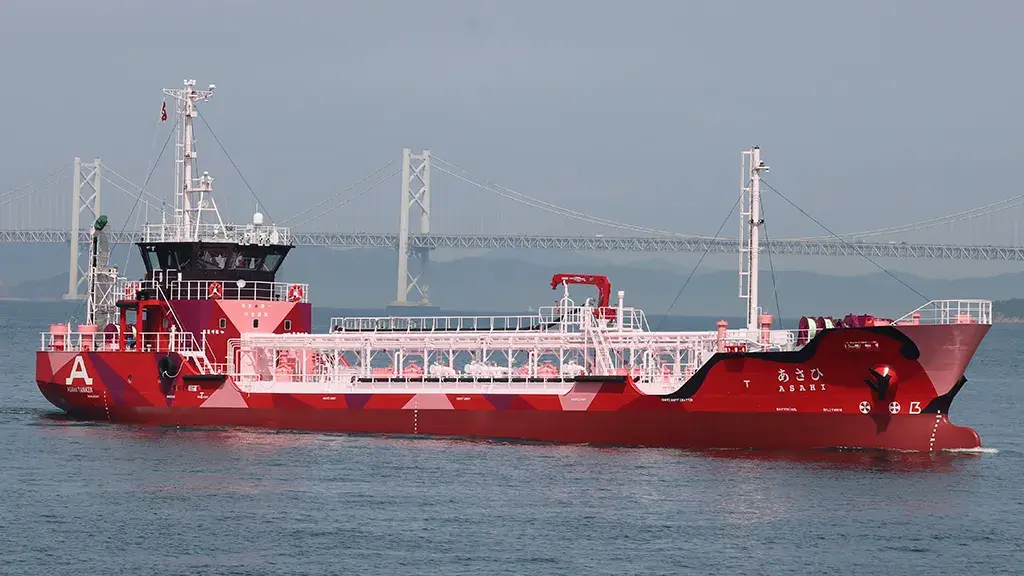
Biodiesel fuel is a drop-in fuel that can be used on existing vessels powered exclusively by conventional heavy fuel oil, and is characterized by the ability to reduce GHG emissions without requiring equipment modifications.
MOL Group is promoting the use of biodiesel fuel as a short-term, readily implementable means of reducing emissions.
MOL Group has conducted actual vessel operations using biodiesel fuel with various blending ratios, such as B30 and B100, and has verified safety and stability under real operating conditions. At the same time, MOL Group is also working to establish a stable fuel supply system through collaboration with supply chain partners.
Alongside low-carbon fuels such as LNG, biodiesel fuel will continue to be expanded as a practical option for advancing emissions reductions from the present stage.
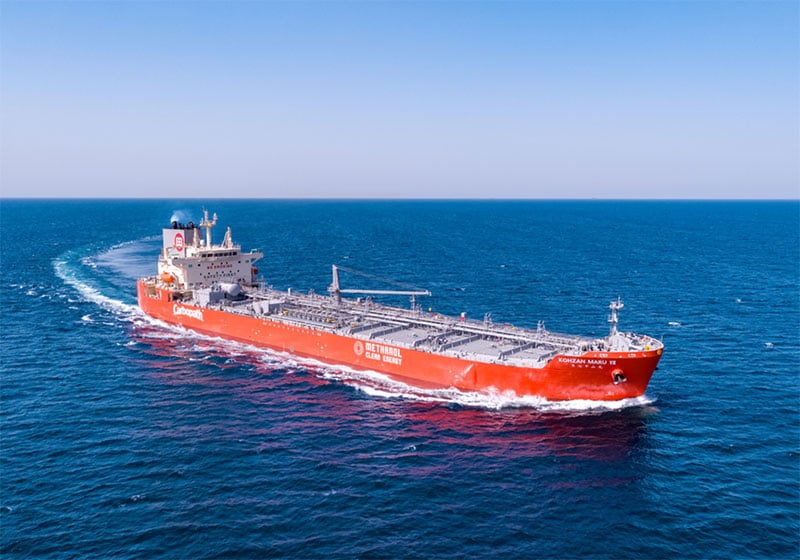
e-/Bio-methanol is a fuel produced from captured CO₂ and hydrogen derived from renewable energy, or from biomass resources. By using non-fossil-based methanol, it is possible to reduce GHG emissions across the entire fuel lifecycle.
MOL Group is advancing the introduction of methanol dual-fuel vessels, leveraging the expertise it has accumulated through methanol transportation.
With the strength of being flexibly applicable depending on vessel type and supply conditions, e/Bio-methanol is positioned as one of the future options for zero-emission fuels.
In addition, MOL Group is also engaged in business studies and partnerships related to the production and use of synthetic fuels (e-fuels), and is aiming to achieve decarbonization across the entire value chain, encompassing fuel supply through to utilization.
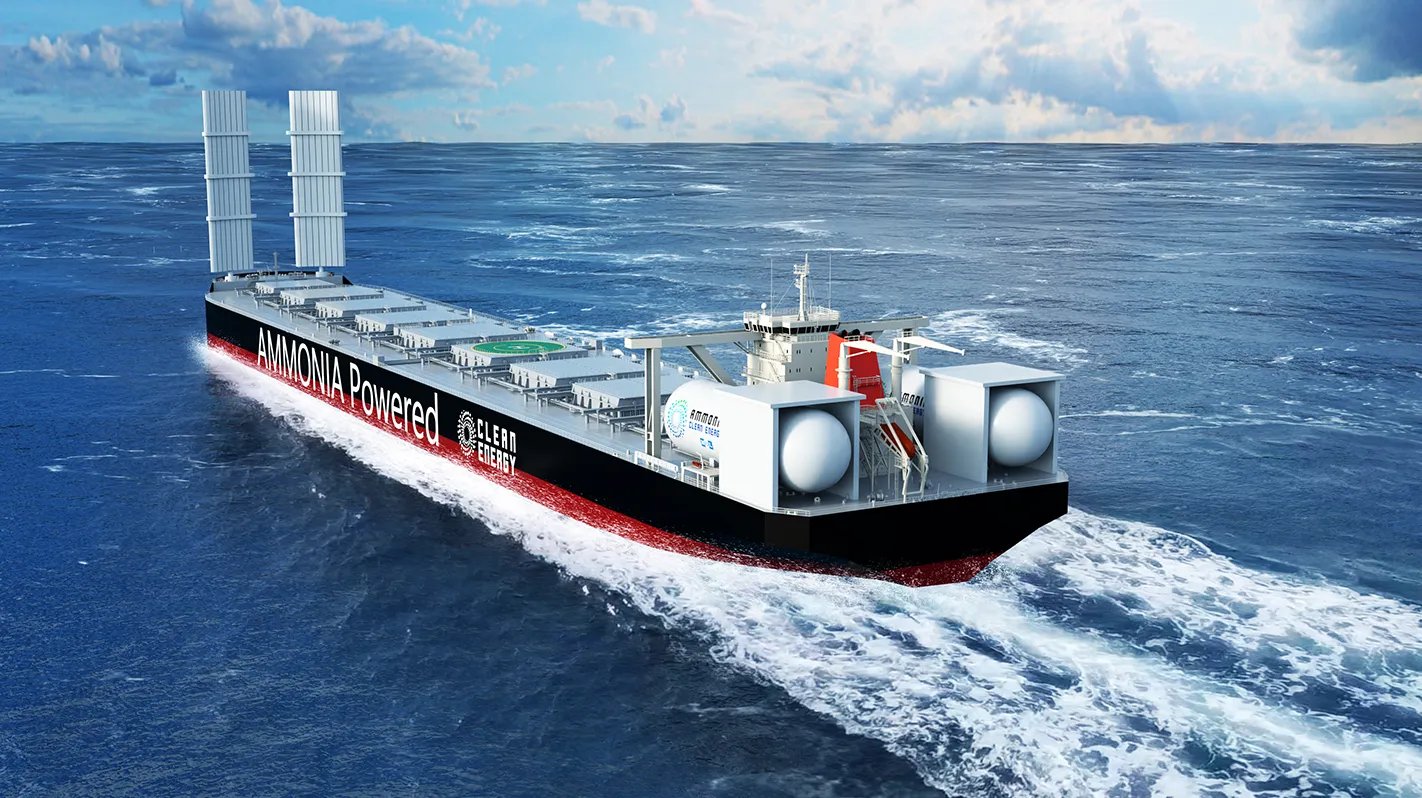
Ammonia is a zero-emission fuel that emits no CO₂ during combustion, and is attracting attention as one of the future primary fuels.
MOL Group is advancing the development of ammonia dual-fuel vessels, while also promoting initiatives aimed at actual operation, including the establishment of fuel procurement systems, the resolution of safety-related challenges, and seafarer training.
With regard to ammonia dual-fuel vessels, efforts are not limited to the operational phase alone. MOL Group is also involved from the vessel construction stage, working to ensure safety and operational feasibility through early-stage engagement.
In 2025, together with CMB.TECH, MOL Group decided to add a total of nine vessels, comprising the world’s first ammonia dual-fuel Capesize bulk carriers and chemical tankers, and is accumulating knowledge through actual vessel deployment.
Through these initiatives, MOL Group is establishing a framework that will enable a prompt response to future phases of expanding ammonia demand.
Hydrogen is positioned as one of the long-term options as a zero-emission fuel that emits no CO₂ during combustion. At the same time, there remain many challenges to be addressed, including fuel handling and supply, as well as engine technologies.
MOL Group is participating in demonstration operations of Dual-fueled vessels and development projects for marine hydrogen fuel engines, and is advancing technical and operational verification.
By accumulating knowledge through actual vessel-based experience, MOL Group is progressively advancing preparations for the social implementation of hydrogen.
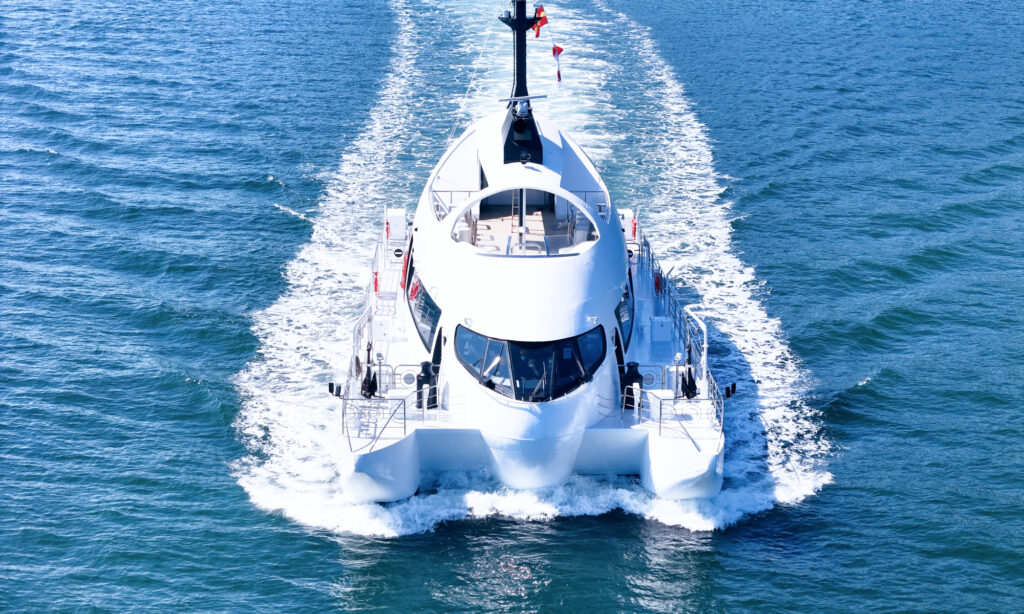
MOL Group is working to reduce GHG emissions and improve the working environment in the coastal shipping sector through the development and introduction of electric propulsion vessels.
Electric propulsion vessels that utilize batteries are expected not only to emit no CO₂ during operation, but also to deliver benefits such as reduced noise and vibration.
MOL Group has steadily accumulated experience in introducing pure battery-powered electric propulsion vessels, while also continuing to examine future technological advancements and the expansion of applicable use cases.
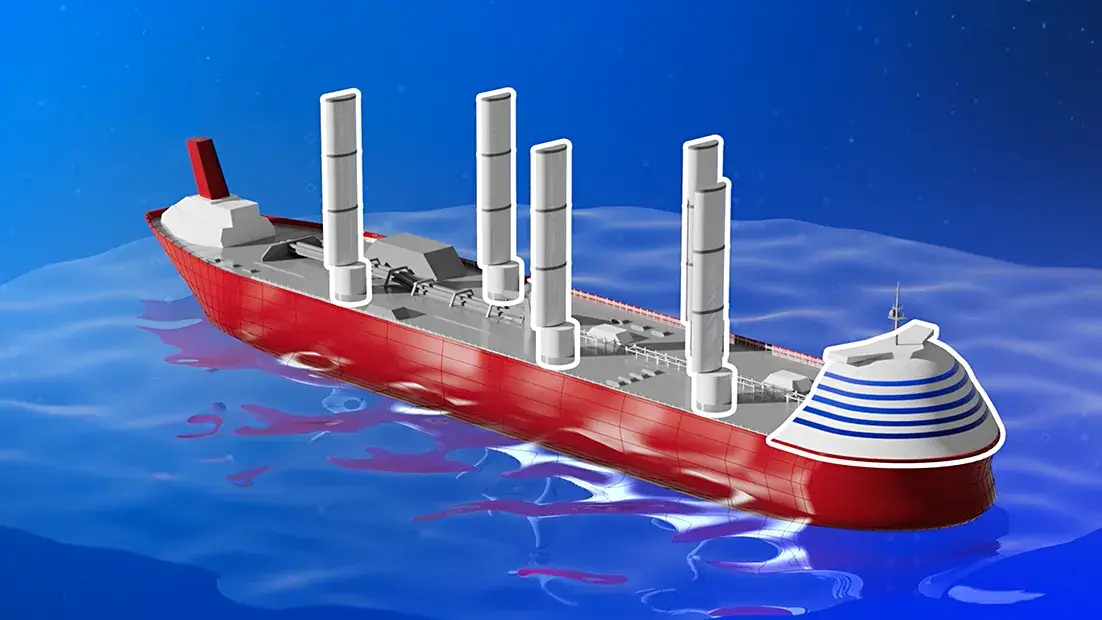
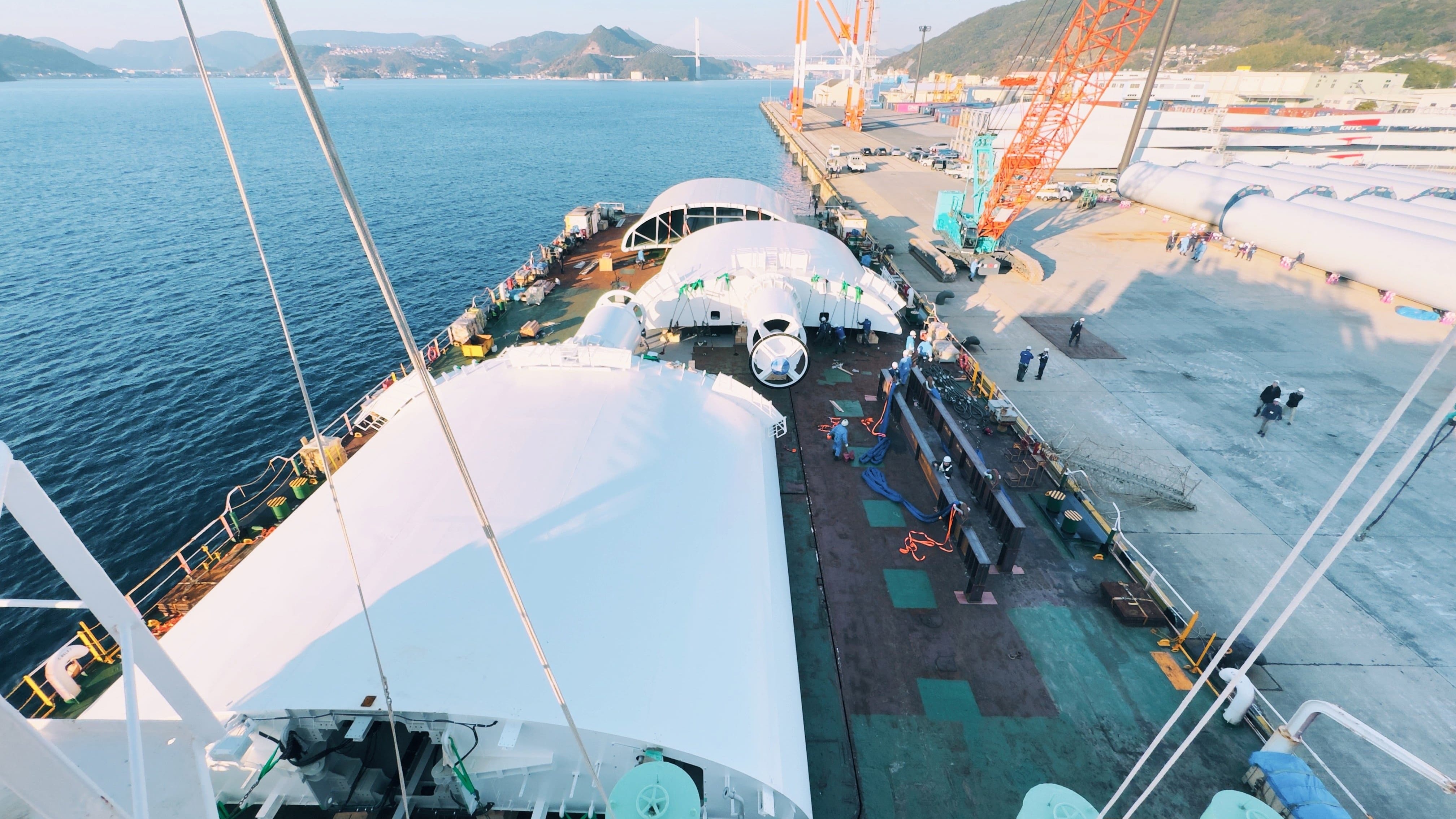
MOL is working to reduce GHG emissions and improve efficiency by, for example, utilizing wind power for vessel propulsion. We are also promoting maritime DX with “FOCUS” and investing in maritime skills education and training.
Learn about MOL Group’s energy‑saving technologies and initiatives to enhance operational quality.
Toward net‑zero emissions by 2050, MOL Group is reducing its own GHG emissions and expanding low‑carbon and decarbonized businesses. These initiatives contribute to GHG reductions across manufacturing, transportation, and supply, within and beyond the value chain.
Learn about MOL Group’s initiatives in low‑carbon and decarbonized businesses.
MOL Group provides comprehensive transportation solutions, including specialized transportation for heavy and oversized cargo. Leveraging the Group’s collective strengths and global network, we offer integrated services tailored to customers’ needs—from marine, land, and air transportation to installation.
Learn about MOL Group’s comprehensive transportation solutions.