
top_wind-challenger

Wind Challenger

The Wind Assisted Ship Propulsion System

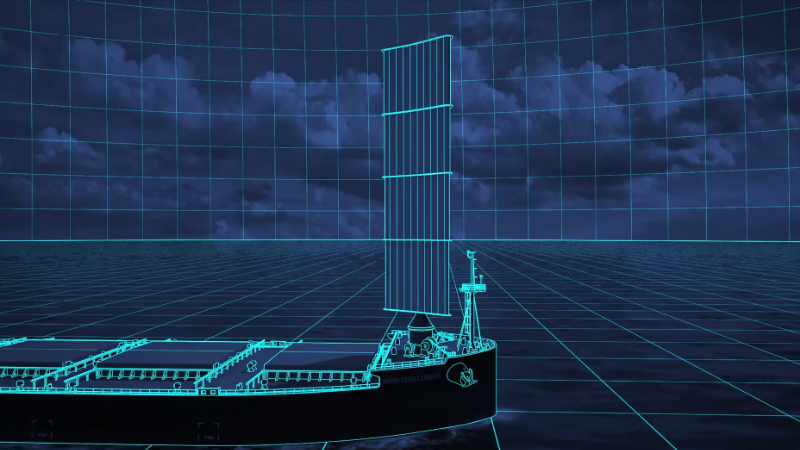
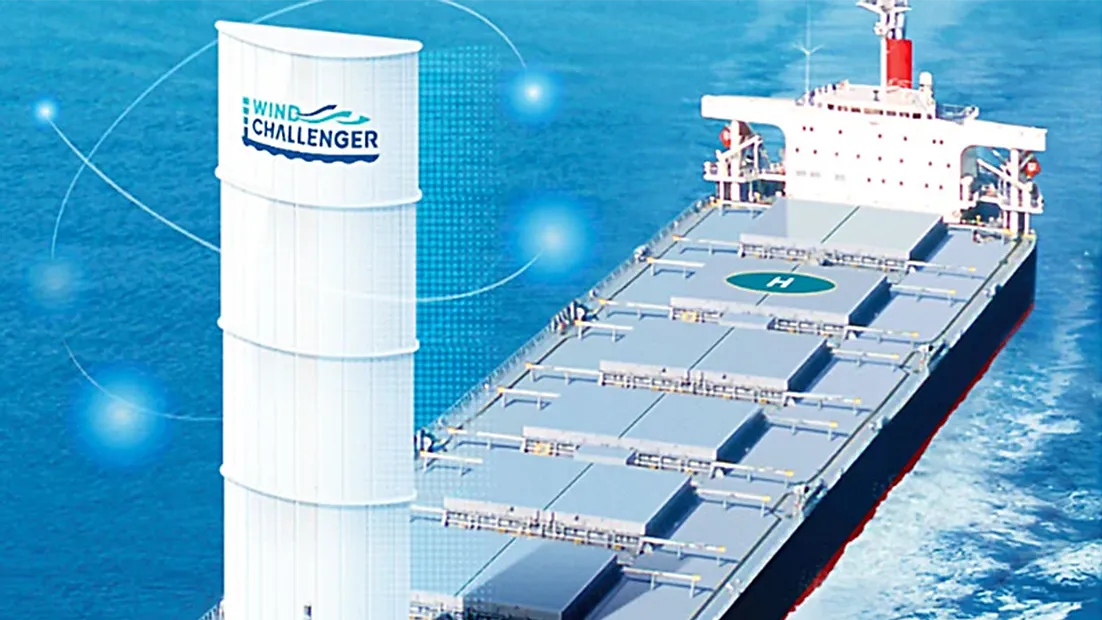
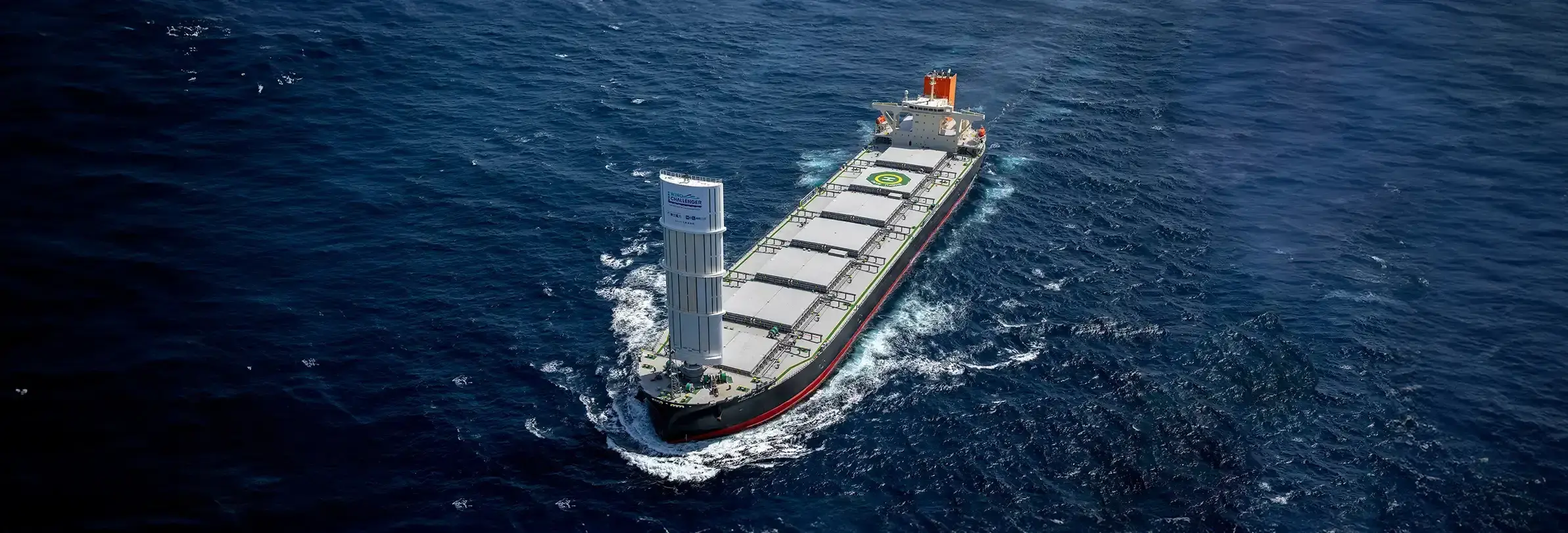
As global demand for carbon neutrality grows, the shipping industry faces increasing pressure to reduce greenhouse gas (GHG) emissions. Recognizing wind power as a clean and inexhaustible energy source, MOL developed the Wind Challenger, a wind-assisted propulsion system that automatically controls sail extension, retraction, and rotation based on real-time wind conditions.

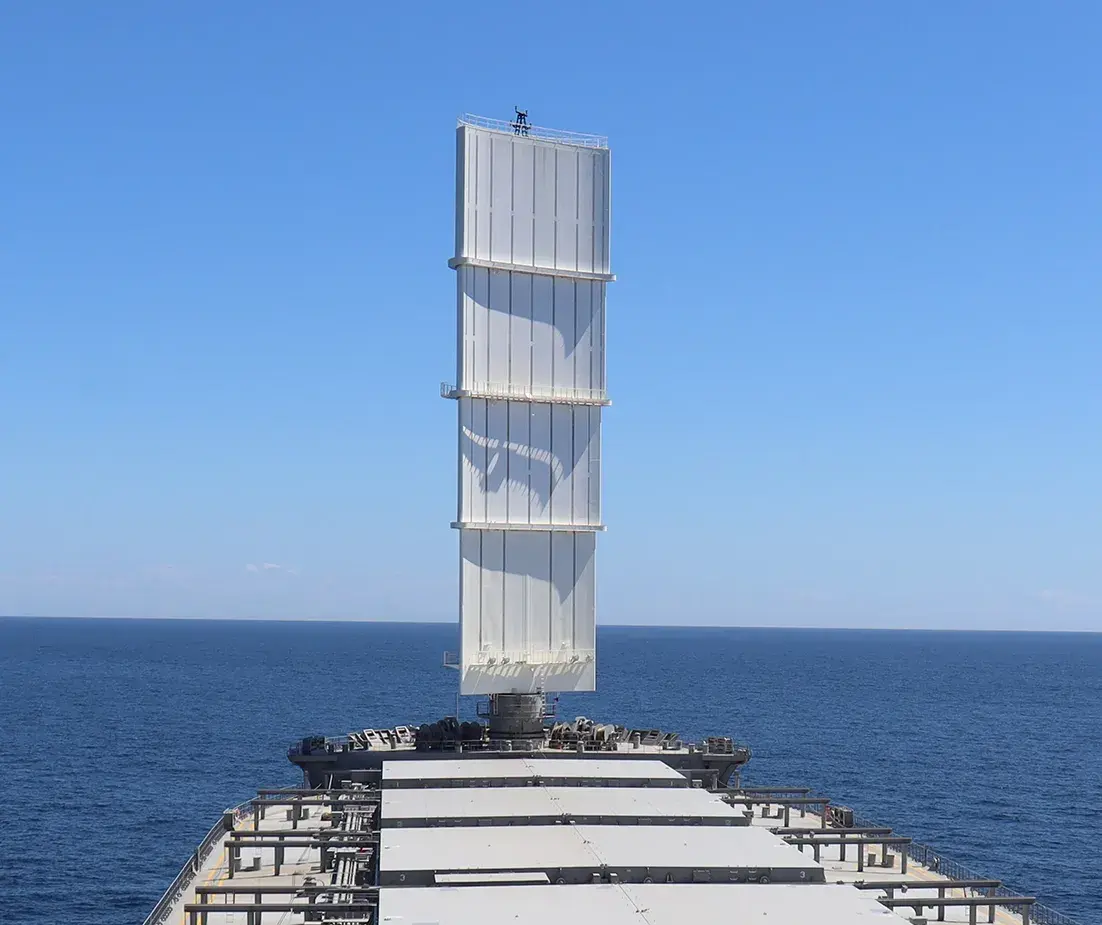
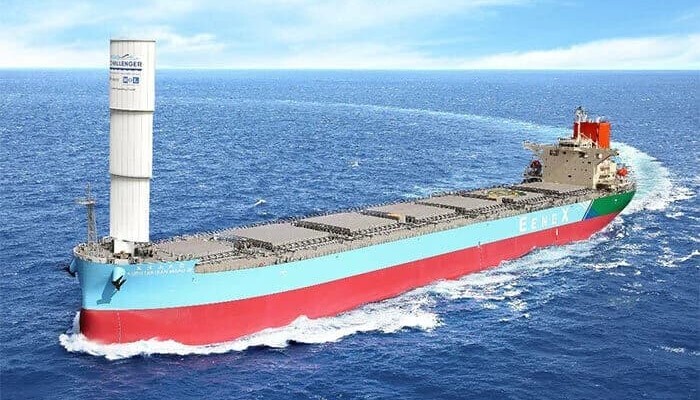
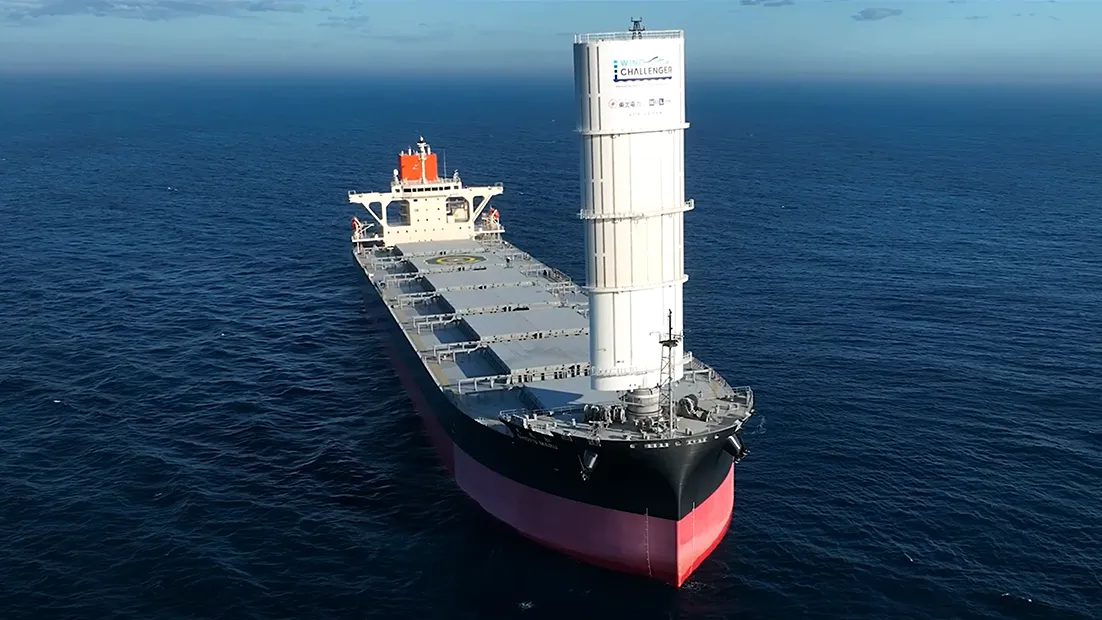
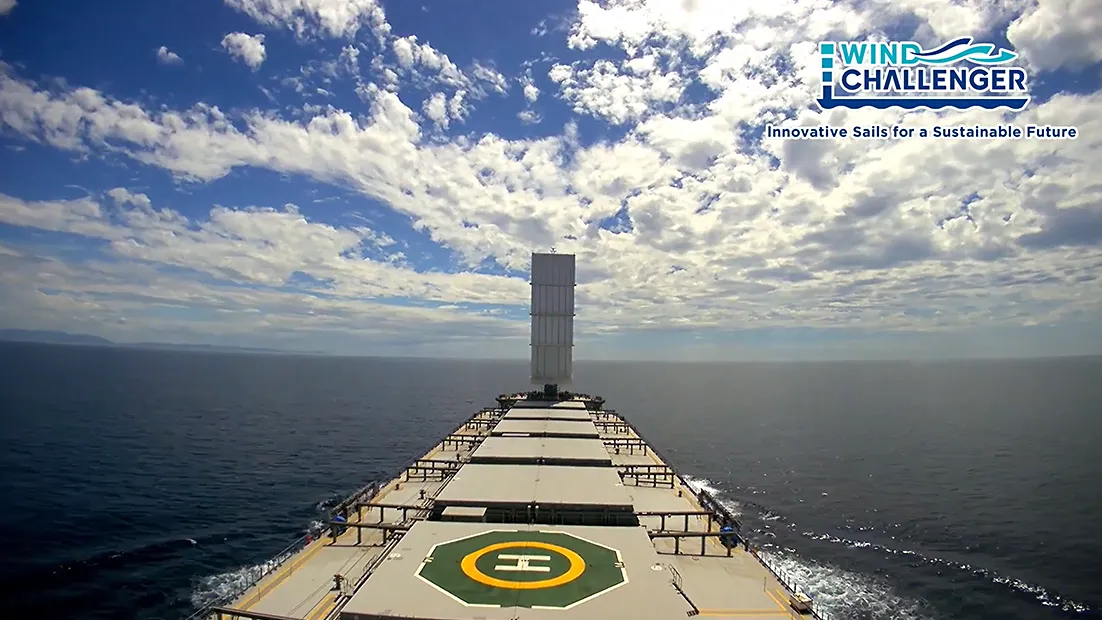
In October 2022, MOL completed the 100,000-DWT coal carrier SHOFU MARU equipped with the Wind Challenger. Through April 2024, the vessel completed seven round-trip voyages carrying coal to Japan from Australia, Indonesia, and North America, reducing daily fuel consumption by up to 17% and achieving average fuel savings of 5% to 8% per voyage.

The application of the Wind Challenger continues to expand to LNG carriers and existing vessels, while Approval in Principle (AiP) has also been obtained for a liquefied CO₂ carrier design, supporting the decarbonization of the shipping industry.

What is a Wind Assisted Ship Propulsion System?

A wind assisted ship propulsion system is a device that assists the propulsion of a ship using the power of wind. Wind is a renewable energy source that incurs no cost and is inexhaustible, and by harnessing its power, we can reduce GHG emissions and fuel consumption.

Anticipated Functions and Benefits of Wind Assisted Ship Propulsion Systems

Wind assisted ship propulsion systems are expected to offer the following three main functions and benefits.

1. Contributing to Fuel Savings and Decarbonization

In July 2023, the International Maritime Organization (IMO), the global standard-setting authority of the United Nations, revised the IMO GHG Strategy which had been adopted in 2018, agreeing on a goal of net-zero GHG emissions from ships by around 2050. In response to this announcement, shipping operators have begun incrementally switching from fossil fuels to zero-emission fuels.

Wind assisted ship propulsion systems are expected to help achieve the goals laid out by the IMO through fuel savings and reductions in GHG emissions achieved through wind assisted operations.
2. Safety and Quality

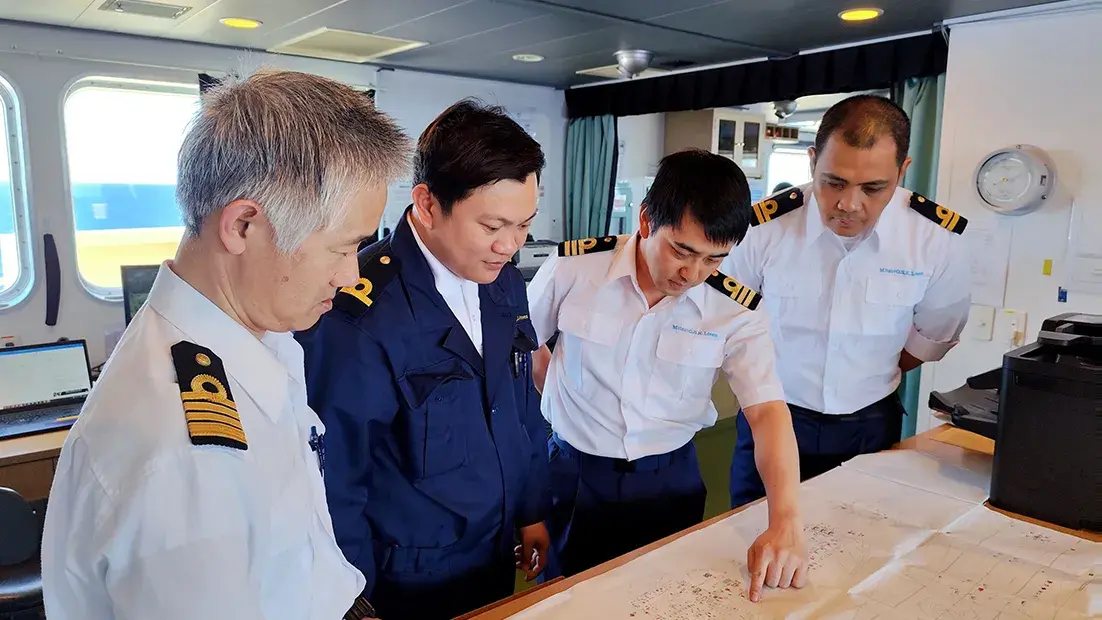
High levels of safety are required in the operation of ships, for which strict international standards and regulations have been established. Ships equipped with wind assisted ship propulsion systems must not only reach their destinations safely, but the systems must also be manufactured with reliable technologies and function without any issues, and their structure must be robust enough to withstand severe weather and resist breakdowns.
3. Usability

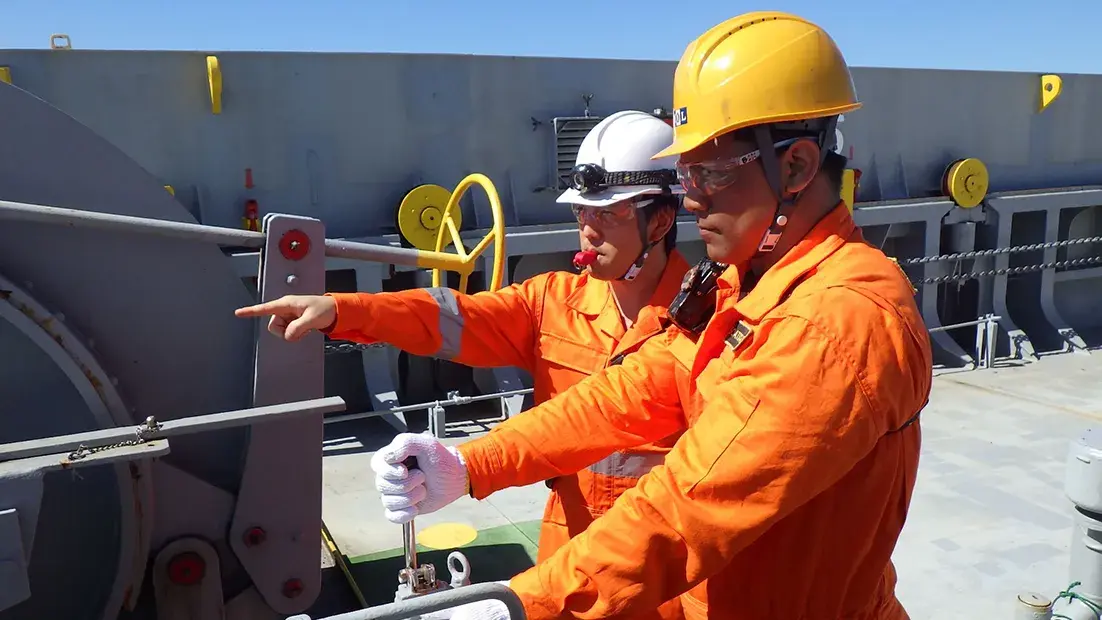
In contributing to decarbonization, ease of operability is another important factor for wind assisted ship propulsion systems. The systems must be compatible with various types of ships from dry bulk carriers to tankers and LNG carriers, both newly-built and existing ones, and must not significantly affect the amount of cargo being carried. It is also crucial that the system does not require specialized skills and can be easily operated, managed, and maintained by general crew members.
MOL’s Wind Challenger: The Latest Wind Assisted Ship Propulsion System

The Wind Challenger is a wind assisted ship propulsion system for hard sail* systems developed by Mitsui O.S.K. Lines, Ltd. It utilizes the renewable energy of wind power to propel ships using sails.

Large commercial vessels today rely almost solely on fossil fuels for their propulsion. The Wind Challenger adds wind power directly to a vessel’s propulsion force by installing sails, reducing the consumption of fossil fuels without changing the vessel’s speed. By combining traditional sailing techniques with the latest technologies, large cargo vessels can reduce fuel consumption and dramatically cut their GHG emissions.

  1. Hard sail: A stiff wing-shaped sail that does not change shape.

Wind Challenger Functions and Features

MOL developed its Wind Challenger using the latest technologies. Here we will explain its features and functions in seven different areas.

1.Maximizes Propulsion by Harnessing Wind Power, Contributing to Decarbonization

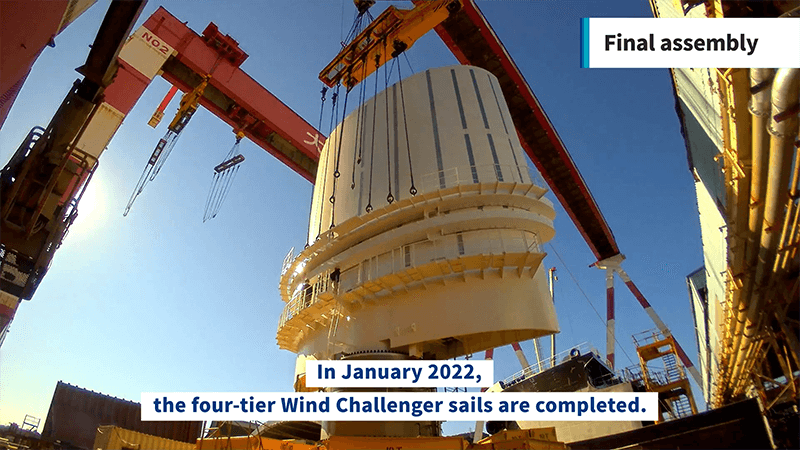
The sails have been made lighter in weight to stabilize the ship by reducing load, while broadening the effective wind direction range by fine-tuning the shape of the sail’s cross section, all of which serves to maximize the use of wind as a propulsion force.

From its inception, the Wind Challenger was developed and implemented with a vision of the single operation of three factors: the sails, the control system, and weather routing (optimum ship routing system). The weather routing system aims to further improve fuel efficiency by proposing the optimum route for the ship.

The SHOFU MARU, the first ship equipped with the system to complete its maiden voyage, recorded fuel consumption reductions of 5% on the Japan-Australia route and 8% on the Japan-North America West Coast route, with daily fuel consumption reduced by up to 17% when the sails were operated in automatic control mode, according to data collected from the ship. Equipment improvements are currently under way based on the performance results of the SHOFU MARU.

2.Weight Reduction and Telescopic Function

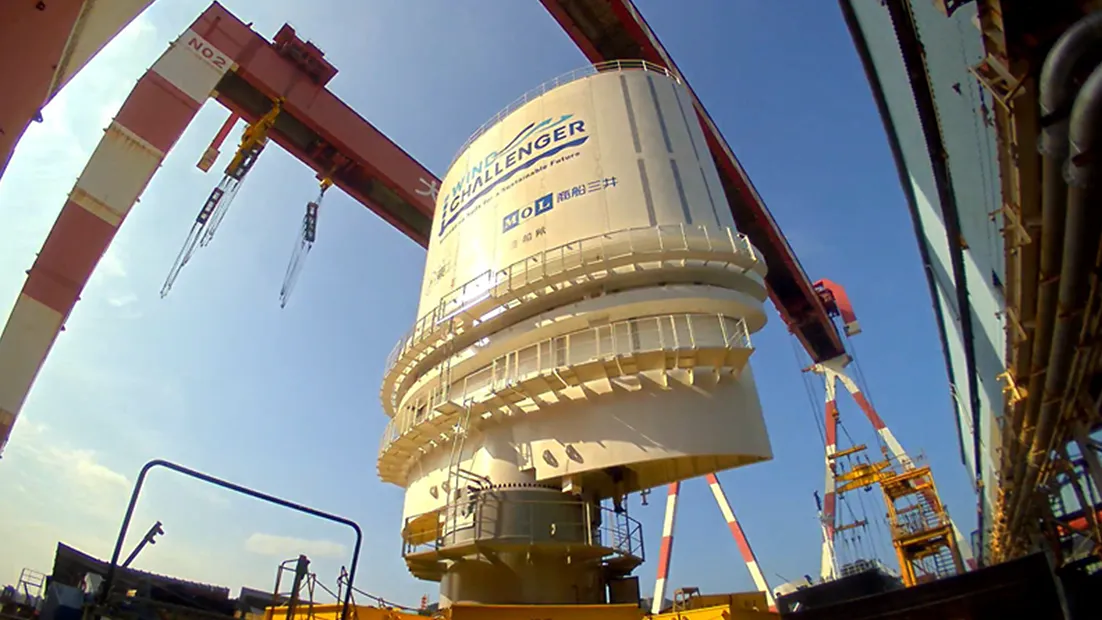
It is crucial that sails be light enough so that the wind assisted ship propulsion system does not impact the amount of cargo that ships can carry. The sails for the Wind Challenger use surface materials made of glass fiber reinforced plastic (GFRP), not typically used as a structural material on ships, to reduce sail weight.

In addition, the sails can be extended and retracted to lower the center of gravity and keep the ship stable when weather is rough. This ensures the same level of safety as conventional vessels without sails.

3.Compatible with Various Types of Vessels

The Wind Challenger can be fitted on both newly built and existing ships. It does not interfere with existing energy-efficiency devices below the waterline and can be implemented on a wide range of vessels, from bulk carriers (dry bulk ships) to tankers and LNG carriers, and multiple units can be installed on a single vessel.

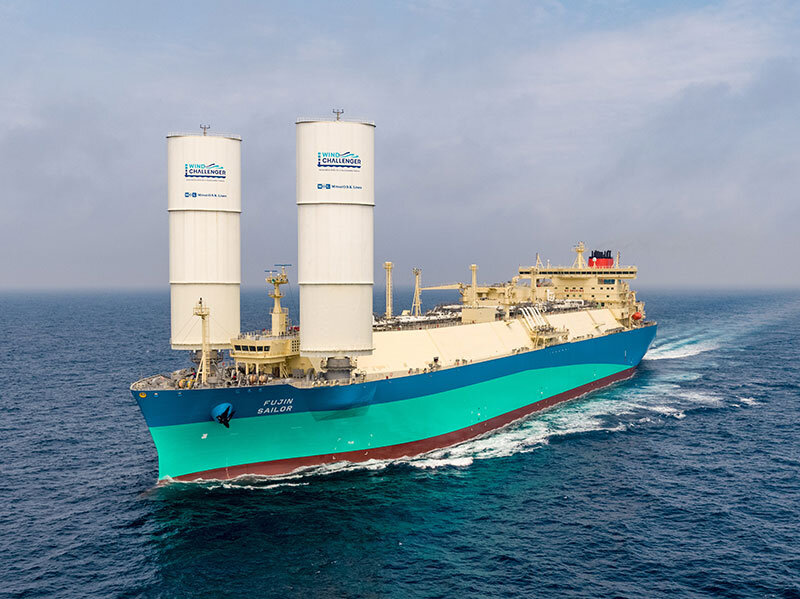
In 2026, the application of the Wind Challenger expanded further with the world’s first retrofit installation on an in-service coal carrier, the world’s first LNG carrier equipped with the Wind Challenger, and the acquisition of Approval in Principle (AiP) for the world’s first liquefied CO₂ carrier design equipped with the system.

World’s First LNG Carrier Equipped with Wind Challenger “FUJIN SAILOR”
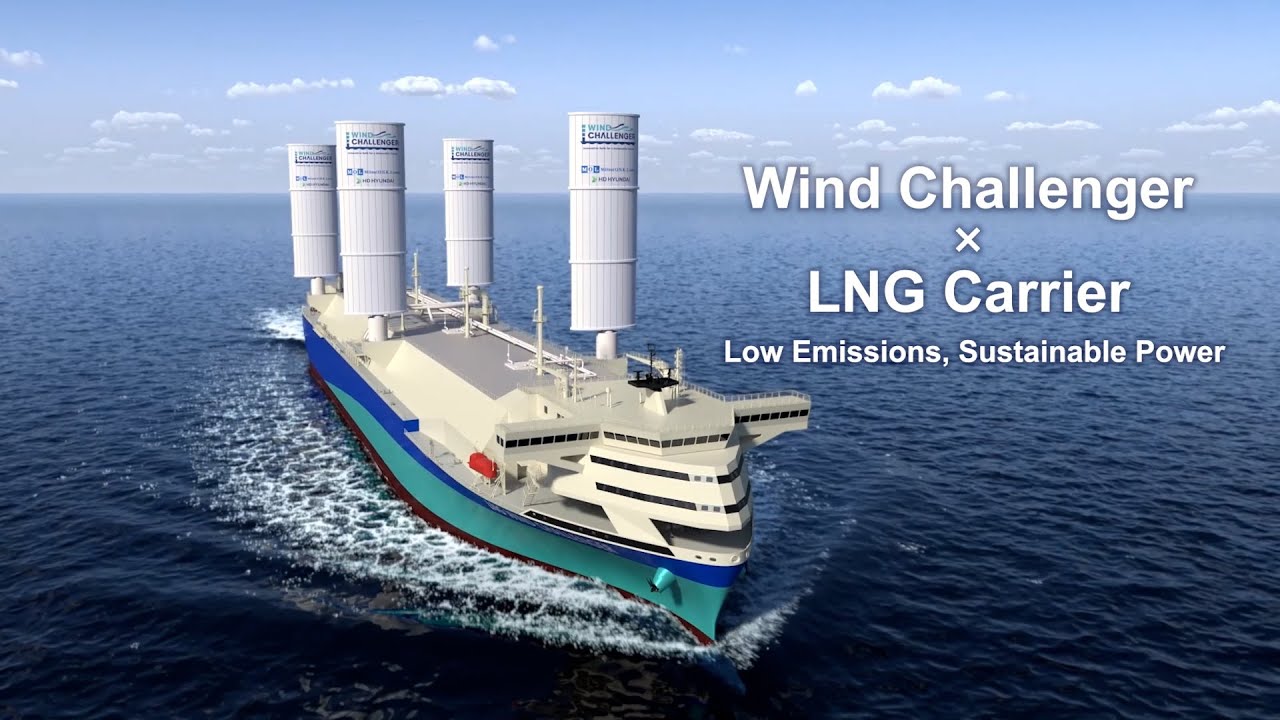
New LNG Carrier Design Equipped with Four Wind Challenger Sails (Concept Image)
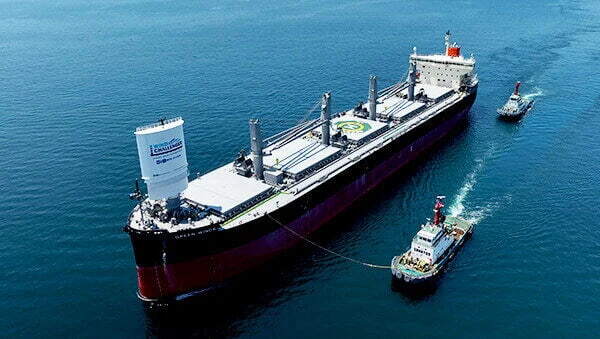
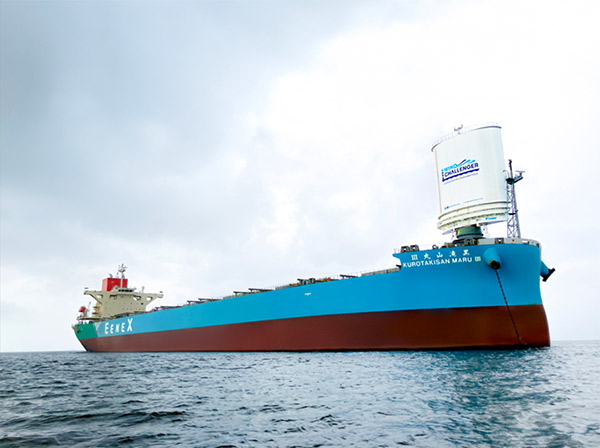
Wind Challenger Retrofit on Existing Coal Carrier “Kurotakisan Maru III”
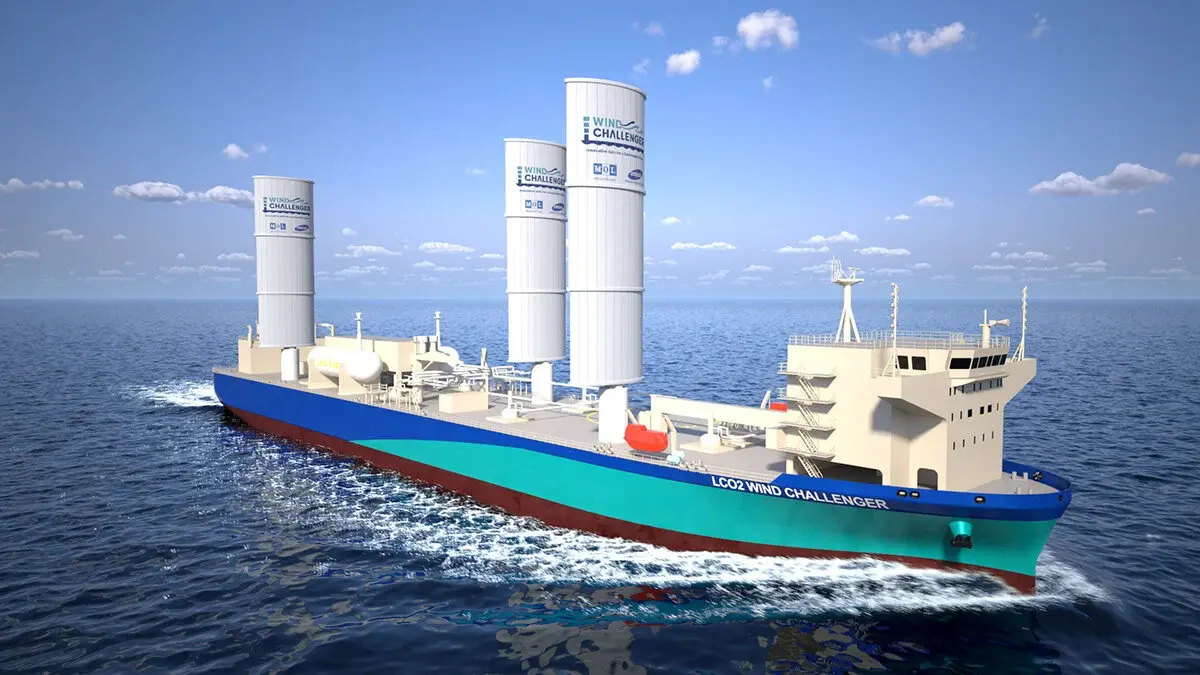
Liquefied CO₂ Carrier Equipped with Three Wind Challenger Sails (Concept Image)

4.Ensuring Safe Navigation in Any Weather Conditions

Safety is an essential element for wind assisted ship propulsion systems. The Wind Challenger has a structure that is lightweight, so it does not impair the vessel’s balance, ensuring safety during navigation.

What is more, operators can choose between the maximum-lift angle and the zero-lift angle that minimizes wind resistance in rough weather, ensuring safe operation in any weather conditions.

5.Auto-Control System that All Crew Members Can Operate

Normally, the sails on sailing vessels must be adjusted in direction and tension according to the strength and direction of the wind, requiring operators to have high levels of knowledge and experience. The Wind Challenger employs a control system that is fully automated, enabling crew members to maximize the use of the wind easily, without any special skills being required. The Wind Challenger has proprietary technology that uses sensors to detect the speed and direction of the wind, and automatically extends, retracts, and rotates the sail.

6.Ease of Maintenance

Like other kinds of general machinery, the mechanical components at the base of the hard sail, such as the hydraulic pumps for sail expansion and contraction and the swivel motors used for rotation, require maintenance based on operating hours.

The steel parts of the sail are protected by paint, but they will be re-painted at a dock if rusting becomes an issue over the years. The FRP components are basically maintenance-free, although we believe they will require repainting after a certain period to maintain their visual appeal as their colors fade with exposure to ultraviolet light.

In our development of the Wind Challenger, we plan to incorporate various kinds of feedback and provide continuous updates to improve usability, performance, and maintainability.
7.Produced with Reliable Technologies that have Supported the Shipping Industry for Years

Led by MOL, which has contributed to marine transportation worldwide for more than 140 years since its founding, the development and manufacture of the Wind Challenger bring together expertise accumulated over many years in the maritime and shipbuilding fields, along with the advanced technologies and manufacturing capabilities of a diverse range of partners in Japan and overseas.

Track Record and Latest Developments

World’s First Retrofit Installation of the Wind Challenger on an In-service Vessel Completed

In April 2026, installation of the Wind Challenger on the Kurotakisan Maru III, a coal carrier serving Electric Power Development Co., Ltd. (J-Power), was completed. This marked the world’s first retrofit installation of the Wind Challenger on a vessel already in service, demonstrating a new option for the decarbonization of existing vessels.

Wind Challenger Retrofit on Existing Coal Carrier “Kurotakisan Maru III”

World’s First LNG Carrier Equipped with the Wind Challenger, FUJIN SAILOR

In September 2026, MOL held a naming ceremony for FUJIN SAILOR, the world’s first LNG carrier equipped with the Wind Challenger. It is also the world’s first vessel equipped with two Wind Challenger units. It is scheduled for delivery under a long-term charter contract to Chevron Corporation at the end of September 2026.

World’s First LNG Carrier Equipped with Wind Challenger “FUJIN SAILOR”

Pioneering the Future of Shipping: MOL’s New LNG Carrier Design Equipped with Four Wind Challenger Units

In September 2025, MOL announced a new LNG carrier design equipped with four Wind Challenger units.
Drawing on MOL’s extensive experience as the world’s largest owner of LNG carriers, the new design prioritizes safety while incorporating advanced technologies and a range of practical considerations, including operational flexibility. It is also expected to contribute significantly to reductions in fuel consumption and greenhouse gas emissions.

World’s First Liquefied CO₂ Carrier Design Equipped with the Wind Challenger

In April 2026, MOL obtained Approval in Principle (AiP) from the classification society Nippon Kaiji Kyokai (ClassNK) for a liquefied CO₂ carrier design equipped with three Wind Challenger units. This is the world’s first liquefied CO₂ carrier design equipped with the Wind Challenger and is expected to contribute to reducing the environmental impact of CO₂ transportation within the carbon capture and storage (CCS) value chain.

Liquefied CO₂ Carrier Equipped with Three Wind Challenger Sails (Concept Image)

Steps for Installing the Wind Challenger

When implementing Wind Challenger, we first ask customers about the type of vessel and ports of call where the Wind Challenger will be used to best respond to their needs, then propose the most suitable vessel specifications.

To achieve its target of net-zero GHG emissions by 2050, MOL plans to deploy 25 vessels equipped with Wind Challenger technology by 2030 and 80 vessels by 2035. We have accumulated operational expertise through the safe management and efficient operation of our fleet of eco-friendly vessels that use both the Wind Challenger and other wind assisted ship propulsion technologies, and we will further advance these technologies and utilize renewable energy while ensuring safety to contribute to GHG emissions reductions by our group to the benefit of society.

Diagram of Steps for Installing the Wind Challenger

Related Press Releases

Download and Consultation

Wind Challenger Service Overview

download materials about outlines the Wind Challenger, including its structure and how it is propelled by wind.
img_download_wind-challenger_eng

Inquiry(Wind Challenger)

Please feel free to contact us about our Wind Challenger and associated services.

  • About services
  • Customization
  • Schedule
  • Quote
  • Support
  • Other

Related Case Studies

Related Solutions

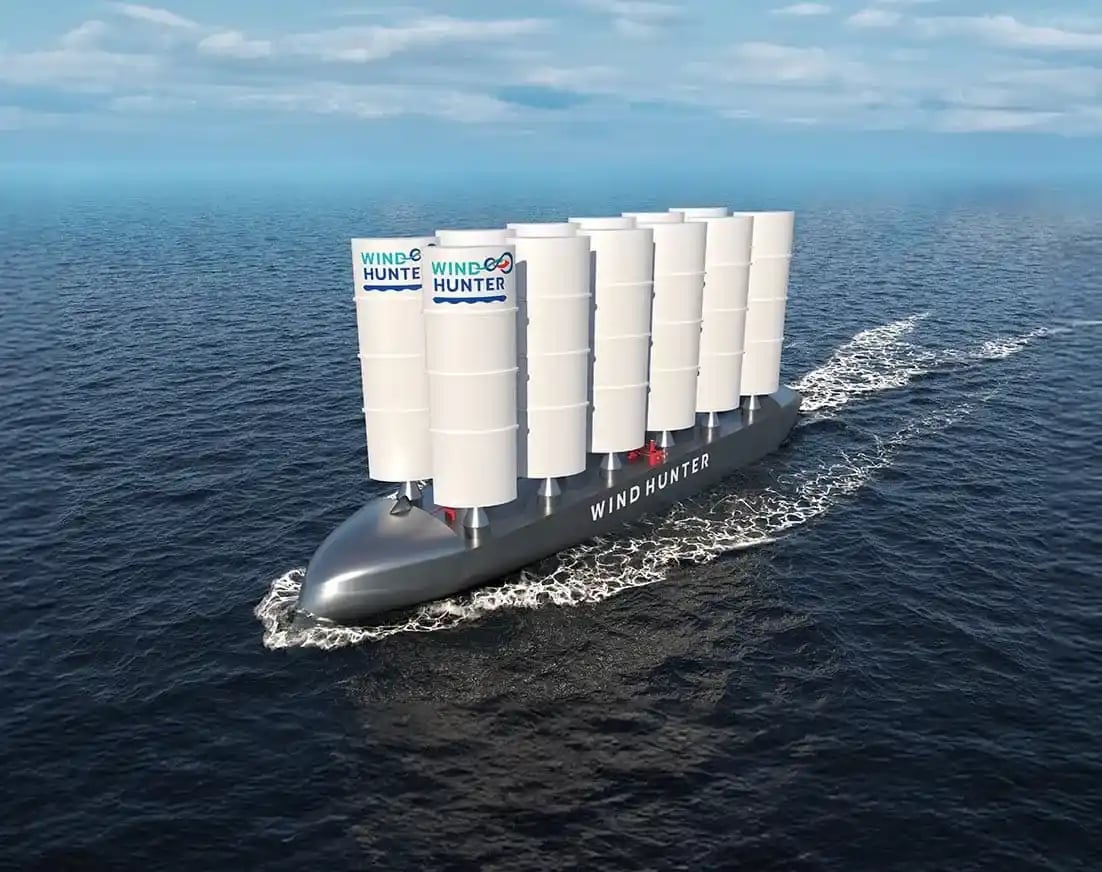
WIND HUNTER

This is an ultimate zero emission project under the Wind Challenger Project, currently in progress with MOL.
Offshore wind energy from sails is used not only as a propulsive force for the vessels, but also for the generation of hydrogen. We are studying ways to supply hydrogen to users on shore by combining this system with fuel cell, etc.
View more

Contact

Contact

Contact us with any question or comment you may have.